

Martyn’s Law 2025: What Every London Venue Owner Needs to Know About Compliance
If you operate a venue, entertainment space, or public premises in London, there's a new piece of legislation you need to understand: and it's going to reshape how security is managed across the UK.
Martyn's Law, formally known as the Terrorism (Protection of Premises) Bill, received Royal Assent on April 3, 2025. While full enforcement won't kick in until at least April 2027, now is the time to assess your obligations and start planning your compliance strategy.
This isn't just another box-ticking exercise. Martyn's Law introduces legally binding security requirements designed to protect the public from terrorist attacks: and non-compliance comes with serious financial and operational penalties.
Here's everything London venue owners need to know.
What Is Martyn's Law?
Martyn's Law is named after Martyn Hett, one of 22 victims killed in the 2017 Manchester Arena bombing. The legislation was born from a campaign led by his mother, Figen Murray, to ensure venues take proactive steps to protect the public from terrorism.
The Act establishes mandatory security obligations for qualifying public premises based on their capacity. It's designed to ensure that venues have clear procedures in place to reduce the likelihood of a terrorist attack: and to minimize harm if one occurs.
Enforcement will be handled by the Security Industry Authority (SIA), the same body that regulates the private security sector in the UK. That means compliance will be treated seriously, with inspections, penalties, and potential criminal sanctions for breaches.
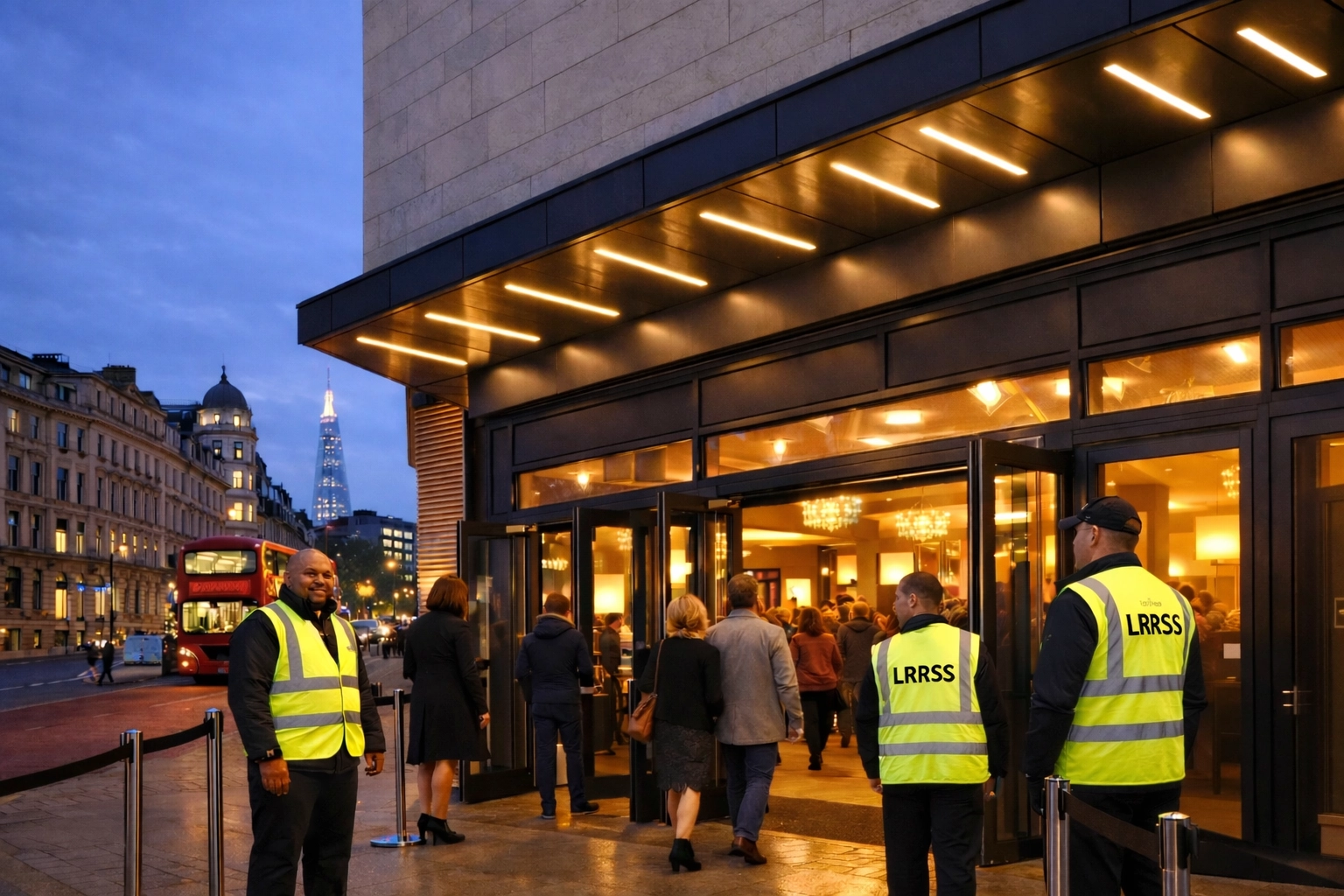
Who Does Martyn's Law Apply To?
The legislation covers 17 categories of premises, including:
- Restaurants, cafés, and bars
- Shops and retail spaces
- Entertainment venues (nightclubs, concert halls, theatres)
- Sports grounds and stadiums
- Cinemas
- Museums and galleries
- Educational establishments
- Places of worship
- Hotels and conference centers
Office buildings and residential developments are not covered under the Act.
If your London venue falls into one of these categories and meets the capacity thresholds, you'll need to comply. The key factor is how many people your premises can hold at any one time: not just seated capacity, but total occupancy.
Understanding the Two-Tier System
Martyn's Law uses a capacity-based approach to determine your obligations. There are two tiers:
Standard Tier (200–799 People)
If your venue can hold between 200 and 799 people, you fall into the Standard Tier. Your obligations include:
✔ Registering with the SIA and notifying them that you're a qualifying premises
✔ Implementing procedural readiness measures, such as:
- Clear evacuation and lockdown protocols
- Staff training on recognizing suspicious behavior
- Communication plans with emergency services
- Regular review of security procedures
Importantly, you won't be required to install physical security infrastructure such as barriers, bollards, or advanced CCTV systems under the standard tier: but you must have documented procedures in place.
Enhanced Tier (800+ People)
If your venue can hold 800 or more people, you're classified as Enhanced Tier. This comes with significantly stricter requirements:
✔ All Standard Tier measures (notification, procedural readiness)
✔ Documented public protection procedures that specifically address:
- Reducing the likelihood of a terrorist attack
- Reducing potential harm if an attack occurs
✔ Submission of your security plan to the SIA for formal assessment
✔ Potential requirements for physical security measures depending on your risk profile
Enhanced tier venues will be subject to closer scrutiny, and the penalties for non-compliance are significantly higher.

Who Is the "Responsible Person"?
For most tenants, compliance obligations are typically covered under standard lease provisions requiring adherence to all laws. If you lease a restaurant, bar, or retail unit, you're likely the responsible person.
For landlords managing multi-tenant properties (like shopping centres or mixed-use developments), you may become the responsible person: especially if you control shared spaces and common areas.
Where both a landlord and tenant are responsible persons (such as a department store operating within a shopping centre), coordination between both parties is mandatory. You'll need clear agreements on who handles what aspects of compliance.
Timeline: When Does Martyn's Law Take Effect?
Although Royal Assent was granted in April 2025, the requirements won't be enforceable until at least April 2027. That gives venue operators approximately 24 months to prepare.
During this period, the SIA will publish:
- Statutory guidance on compliance requirements
- Educational resources via GOV.UK and ProtectUK platforms
- Templates and toolkits for developing public protection procedures
Why act now?
Waiting until 2027 is risky. Developing compliant procedures, training staff, and coordinating with landlords or tenants takes time. Early preparation ensures you're not scrambling at the last minute: and demonstrates due diligence if ever questioned by the SIA.
If you operate multiple venues or complex premises, the lead time for compliance could be even longer.
Enforcement and Penalties: What Happens If You Don't Comply?
The SIA has been granted inspection powers and can issue:
- Compliance notices requiring you to take specific actions within a set timeframe
- Restriction notices, including the power to temporarily close your venue for serious non-compliance
Financial Penalties
The financial stakes are significant:
- Standard Tier: Up to £10,000 for non-compliance, plus £500 per day for ongoing breaches
- Enhanced Tier: Up to £18 million or 5% of worldwide revenue (whichever is higher), plus £50,000 per day for continuing non-compliance
Criminal Sanctions
In addition to financial penalties, criminal prosecution is possible for:
- Failing to comply with enforcement notices
- Providing false or misleading information to the SIA
- Operating a venue in breach of a restriction notice
Bottom line: compliance isn't optional. The consequences of ignoring Martyn's Law are serious, both financially and reputationally.

How London Rapid Response Security Services Can Help
Navigating Martyn's Law compliance doesn't have to be overwhelming. At London Rapid Response Security Services, we specialize in helping London venues develop and implement effective, compliant security strategies.
Here's how we can support you:
1. SIA-Licensed Security Personnel
All our staff are fully SIA-licensed, meaning they meet the same standards enforced by the body overseeing Martyn's Law compliance. Whether you need door supervisors, manned guarding, or front-of-house security, our team is trained to manage access control, identify suspicious behavior, and respond to incidents professionally.
2. Procedural Readiness Planning
We work with London venues to develop tailored public protection procedures that meet Martyn's Law requirements. This includes:
- Risk assessments specific to your premises
- Evacuation and lockdown protocols
- Staff training on counter-terrorism awareness
- Communication frameworks with emergency services
3. Enhanced Tier Support
For venues holding 800+ people, we provide documented security plans that can be submitted to the SIA for assessment. We'll help you identify vulnerabilities, recommend proportionate physical security measures, and ensure your procedures meet legal standards.
4. Ethical, Professional Standards
We're a London Living Wage Foundation accredited employer. By paying our staff fairly, we retain motivated, professional officers who take their responsibilities seriously. When compliance and public safety are on the line, the quality of your security team matters.
5. Ongoing Compliance Support
Martyn's Law isn't a one-time project: it requires ongoing review and adaptation. We provide regular audits, refresher training, and updated procedures to ensure your venue stays compliant as guidance evolves.
Next Steps for London Venue Owners
If you operate a qualifying premises in London, here's what you should do now:
1. Assess Your Capacity: Determine whether you fall into the Standard Tier (200–799 people) or Enhanced Tier (800+ people).
2. Review Your Current Security Measures: Do you have documented evacuation procedures? Is your staff trained on emergency response? Are you working with professional security services in London who understand regulatory compliance?
3. Monitor SIA Guidance: Keep an eye on updates from the SIA, Home Office, and ProtectUK as statutory guidance is released.
4. Start Planning Now: Use the 24-month implementation window to develop compliant procedures, train staff, and partner with experienced manned guarding services in London who can support your compliance journey.
5. Get Expert Advice: If you're unsure where to start, contact a professional security provider who understands Martyn's Law and can tailor a solution to your specific venue type and risk profile.
Get in Touch
Martyn's Law is coming: and the time to prepare is now. Whether you need door supervisors in London, a full security audit, or help developing compliant public protection procedures, we're here to guide you every step of the way.
📞 Call us: +44 (0) 208 050 4489
📧 Email: info@londonrapidresponse.co.uk
🌐 Visit: londonrapidresponse.co.uk
London Rapid Response Security Services : professional, ethical, and ready to help you meet the challenges of Martyn's Law.